
Ross Phelps
Service / UX / Design Leadership
Portfolio
Portfolio

 Jan 2022 - Dec 2022
 Hybrid, London, UK
 Client-Side Contract
BP’s SuperFleet initiative set out to revolutionise fleet management while supporting the company’s transition to sustainable energy. As a Service Design Consultant, I led hands-on service design efforts, mentored a global team of designers across the UK, EU, and Australia, and combined strategic thinking with practical execution. My focus was on embedding customer insights, organisational collaboration, and service frameworks for fleet mobility.
My role blended strategic leadership with hands-on delivery. I defined a global design discovery framework as part of a new delivery strategy, addressing the complexities of fleet management while empowering cross-functional teams to deliver exceptional outcomes based on my discovery.
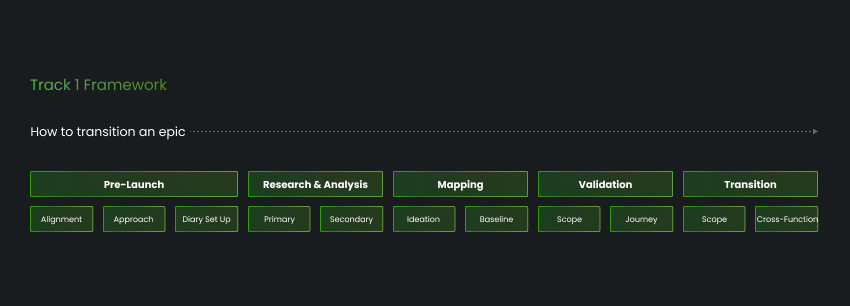
Let’s be honest, Agile isn’t always agile, even in its purest form. I can’t count the number of times I’ve seen cadence and process stifle innovation—it’s highly likely we share this sentiment. BP was prepared to try a new delivery methodology for our programme, and we adopted the tri-track Agile approach, which separated discovery from delivery. This method enabled iterative prototyping, faster validation, and a clear focus on strategy. Personally, I delivered the framework for Track 1, through which all epics would transition, gradually increasing the emphasis on collaboration. My work empowered 12 cross-functional delivery squads that formed Track 2.
Below is a high-level view of the framework which every epic would transition through, ready for squad delivery:
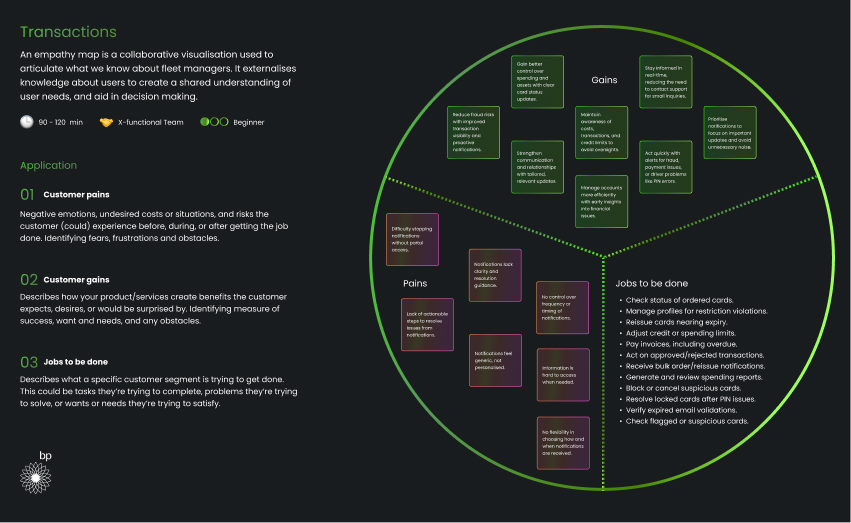
Fleet managers were at the heart of the programme. My goal was to truly understand their needs, through comprehensive research across the UK, EU, and ANZ markets, combining qualitative and quantitative methods to uncover key insights. This coupled with a strong narrative when communicating findings led to wider organisational buy-in:
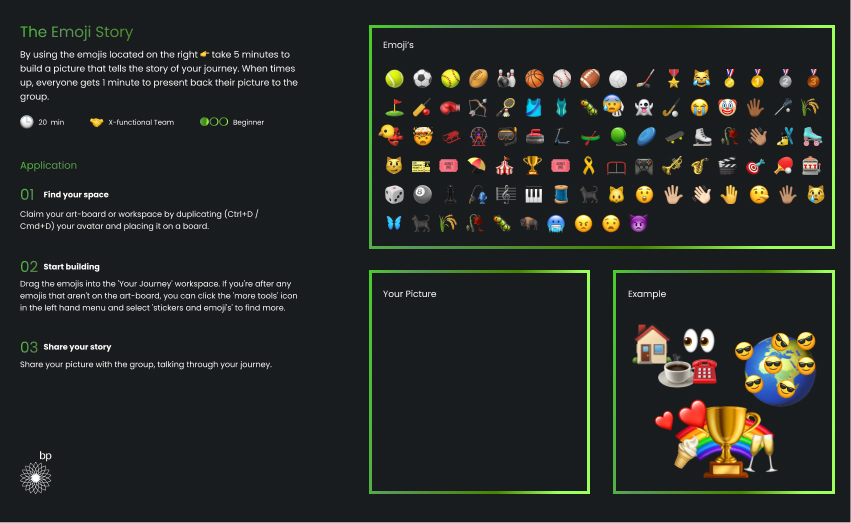
Workshops were central to my discovery approach, enabling collaboration across design, business, and technology teams. I created a series of fun, engaging, and outcome-focused sessions that captured the imagination of stakeholders. These included traditional methodologies like value proposition design, as well as my own story telling exercises like “The Emoji Story” method, which was widely shared within the design organisation and became a firm favourite amongst my peers.
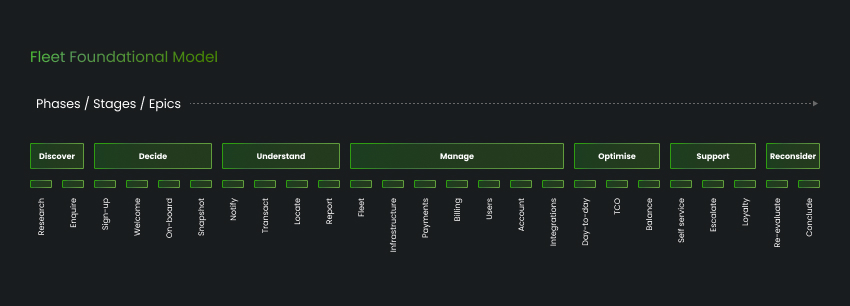
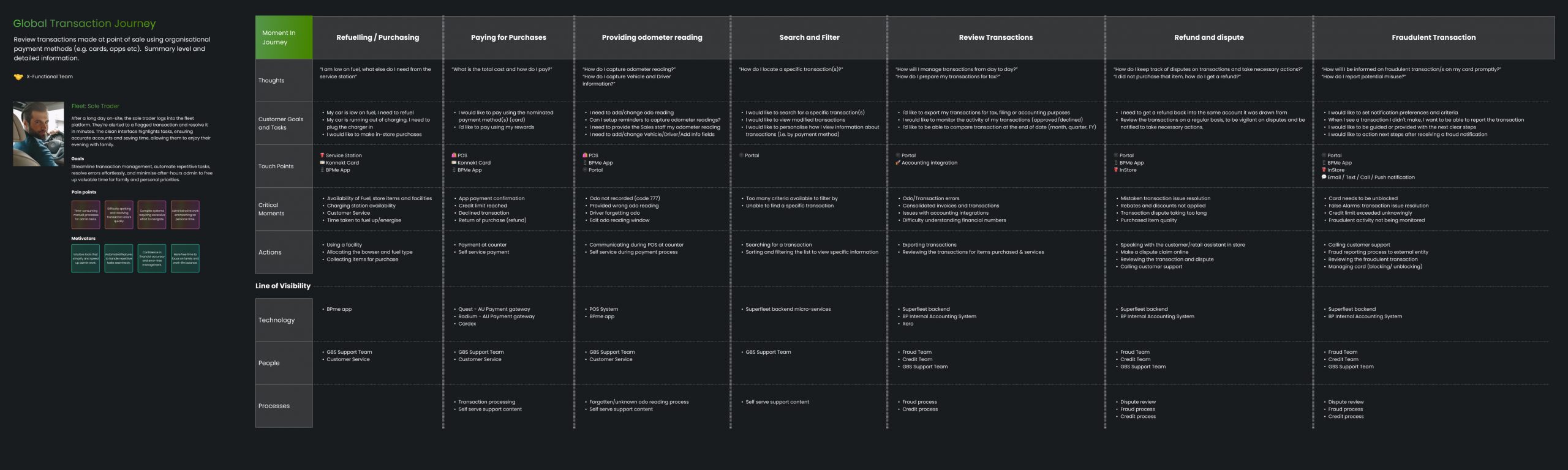
Each domain and service challenge I tackled came from an end-to-end foundational model. I defined the future state service across 11 service driven domains including critical micro-services like payments, invoicing, and notifications. These journeys mapped customer needs and goals, tasks, and pain points, as well as backstage process mapping, providing actionable insights for every delivery squad.
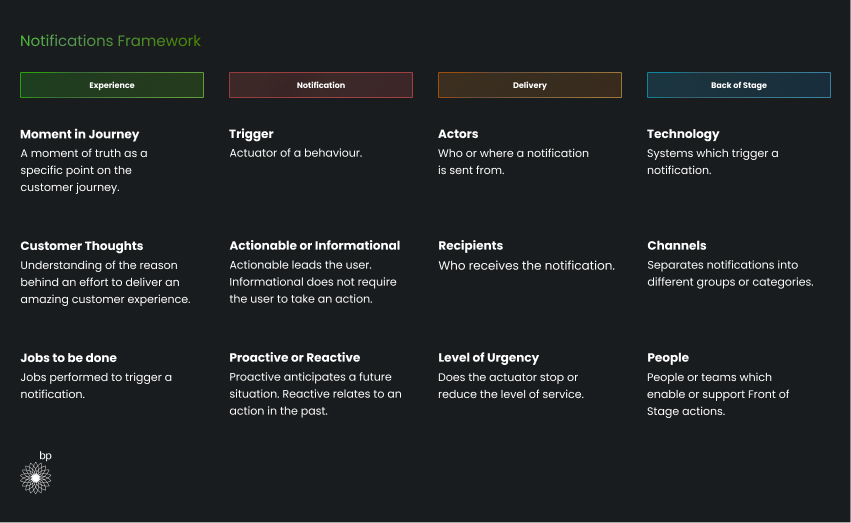
Notifications Framework
For fleet managers timely communication is a critical factor in both success and emergencies. I developed an enabler framework for categorising notifications by urgency and actionability, enhancing fleet managers’ ability to respond to issues proactively. This epic contained the single most amount of dependencies and unknowns of any uncovered throughout discovery, it felt like the glue that held the experience together – enabling the jobs to be done.
Service Maps
By connecting customer journeys with processes, people, and technologies, I ensured a seamless and consistent service experience. Maps were transitioned to squads of product owners, design and developers, giving them a central focus and direction of where to conduct further research and where to sodutionise.
Unified service delivery
Mapped and streamlined fragmented systems, addressing a key pain point for fleet managers.
Scalable Frameworks
Delivered an adaptable framework that respected regional regulations while maintaining consistency.
Fraud Prevention
Implemented fuel card restrictions, reducing fraud risk.
Solutions
Prioritised features that supported fleet managers’ dependency on real-time, on-the-go issue mitigation.
Organisational Alignment
Created collaboration between business, design, and engineering teams, ensuring a shared vision.